Building a Strong Foundation for Effective Christian Service
Program Level: Foundational Ministry Training
Institution: RAPGM Theological Seminary
Delivery Mode: Online and Flexible Learning
Tuition: Free
Application Form Fee: GHS 100
Certification: Certificate in Christian Ministry upon successful completion and payment of the applicable certificate processing fee.
Program Overview
The Certificate in Christian Ministry at RAPGM Theological Seminary is a foundational training program designed to equip believers with the biblical knowledge, spiritual discipline, Christian character, and practical ministry skills necessary for effective service in the Kingdom of God.
We believe that every genuine calling requires preparation, discipline, and a commitment to learning. A desire to serve God is important, but ministers must also understand Scripture, develop godly character, relate wisely with people, and learn how to serve different groups within the church and wider community.
This program provides students with a strong foundation in Christian faith while introducing them to essential areas of ministry, including prophetic ministry, marriage and counselling, children and youth ministry, and chaplaincy.
Whether you are a new believer seeking a deeper understanding of Christianity, a church worker desiring to grow in service, or an individual exploring a call to ministry, this program will help you establish a stronger foundation for your spiritual growth and development.
Biblical Foundation:
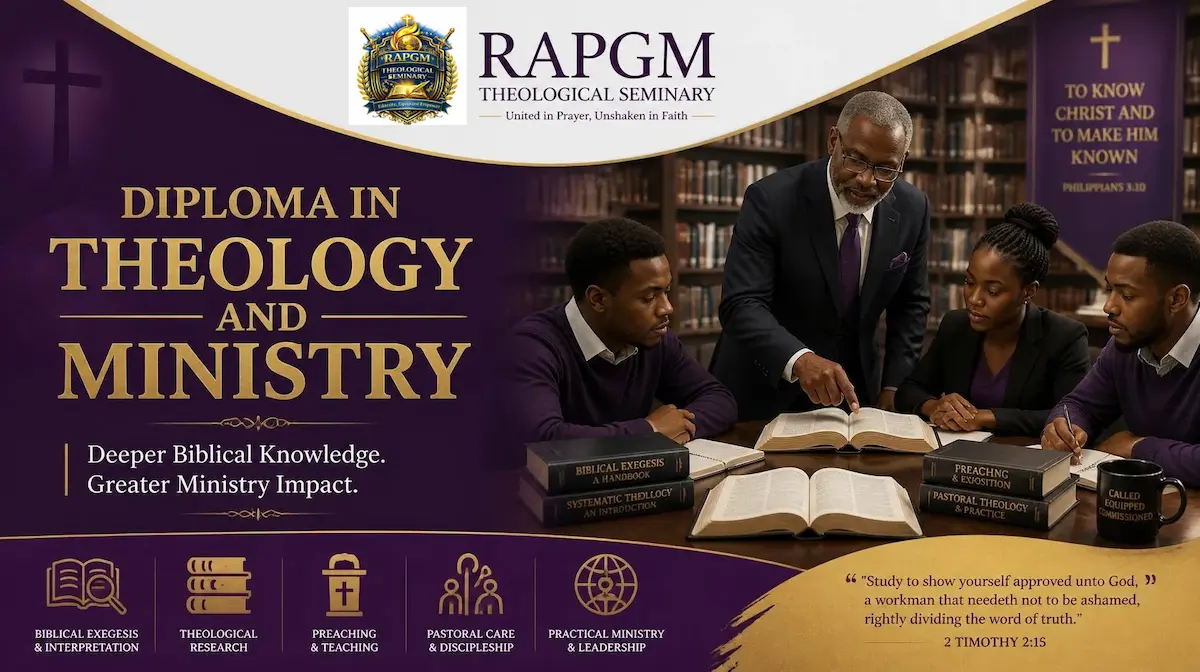
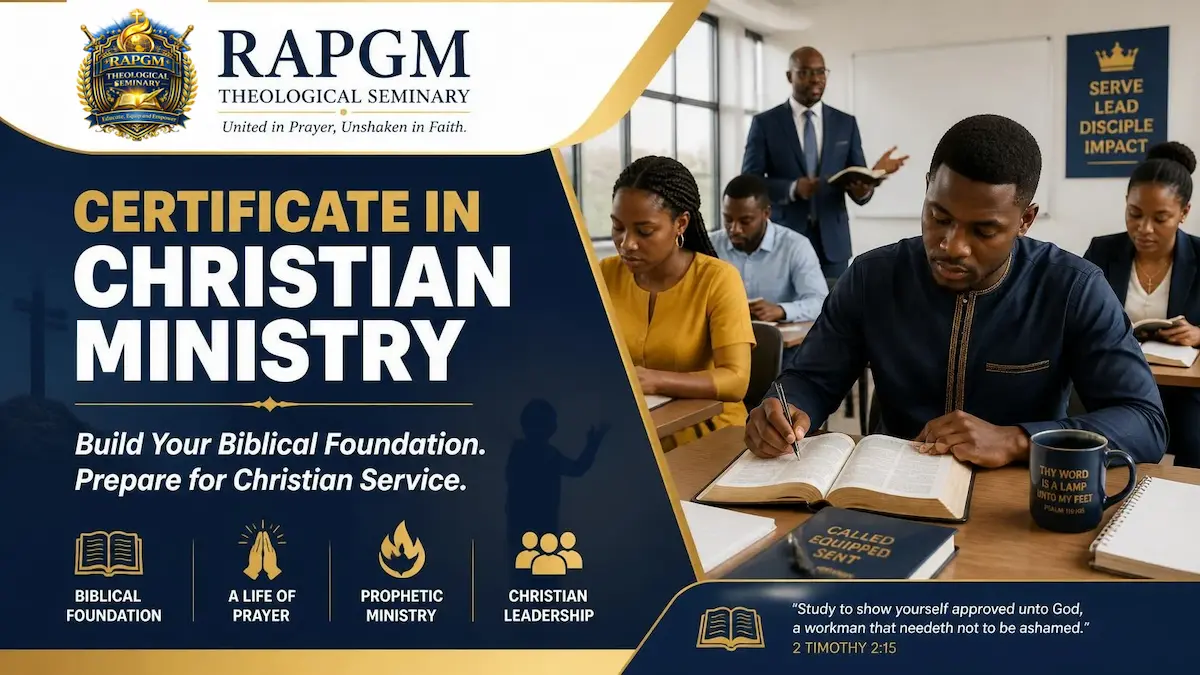
“Study to shew thyself approved unto God, a workman that needeth not to be ashamed, rightly dividing the word of truth.” — 2 Timothy 2:15 (KJV)
Purpose of the Program
The purpose of this program is to provide accessible, biblically grounded ministry education that helps students grow in faith, develop Christian character, and acquire introductory skills for serving God and His people.
Students will be encouraged to combine biblical knowledge with prayer, humility, integrity, compassion, and responsible ministry practice.
What You Will Study
1. Foundations of the Christian Faith
Students will explore the fundamental beliefs of Christianity and develop a clearer understanding of the Christian life.
Topics include:
- The nature and attributes of God.
- The person and work of Jesus Christ.
- Salvation, repentance, faith, and new birth.
- The person and work of the Holy Spirit.
- Christian discipleship and spiritual growth.
- The importance of holiness and obedience to God.
- The role of the local church in Christian life.
Learning outcome: Students should be able to explain the fundamental beliefs of the Christian faith and apply biblical principles to their daily lives.
2. Introduction to the Bible
The Bible is the foundation of Christian faith, doctrine, and ministry. This module introduces students to the structure, purpose, and authority of Scripture.
Topics include:
- The inspiration and authority of the Bible.
- The Old Testament and the New Testament.
- The major divisions and books of the Bible.
- Understanding biblical context.
- Introduction to Bible study and interpretation.
- Applying Scripture responsibly in preaching, teaching, and personal devotion.
- Recognizing the importance of sound biblical doctrine.
Learning outcome: Students should develop the ability to study Scripture more effectively and communicate basic biblical truths accurately.
3. Prayer and Spiritual Discipline
Prayer is essential to the life and ministry of every Christian worker. This module introduces students to biblical prayer, intercession, fasting, and the development of a consistent devotional life.
Topics include:
- The purpose and importance of prayer.
- Different expressions of prayer in Scripture.
- Intercession and standing in prayer for others.
- Fasting and spiritual discipline.
- Personal devotion and Bible meditation.
- Developing consistency in prayer.
- Depending on the Holy Spirit in Christian service.
Learning outcome: Students should be able to develop a personal prayer routine and understand the role of prayer in ministry.
4. Christian Character, Holiness, and Ministerial Ethics
Ministry requires more than spiritual gifts or public speaking ability. A Christian minister must demonstrate integrity, humility, self-control, compassion, and faithfulness.
Topics include:
- The fruit of the Holy Spirit.
- Holiness and personal conduct.
- Integrity in ministry.
- Humility and servant leadership.
- Accountability and responsible use of authority.
- Confidentiality and appropriate boundaries.
- Financial integrity and stewardship.
- Avoiding manipulation, exploitation, and the misuse of spiritual influence.
Learning outcome: Students should understand the importance of godly character and ethical conduct in Christian service.
5. Introduction to Prophetic Ministry
This module introduces students to the biblical understanding of prophecy and the responsible exercise of spiritual gifts within the Christian community.
Students will learn to approach prophetic ministry with humility, discernment, biblical understanding, and accountability.
Topics include:
- The biblical foundations of prophetic ministry.
- Prophets and prophecy in the Old and New Testaments.
- The role of the Holy Spirit and spiritual gifts.
- Introduction to dreams, visions, and spiritual impressions.
- Basic principles of dream symbolism and interpretation.
- Biblical discernment and testing prophetic messages.
- Order, accountability, and responsible prophetic communication.
- The difference between biblical encouragement and unsupported claims of divine revelation.
Key Scriptures: 1 Corinthians 12:7–11; 1 Corinthians 14:1–5, 29–33; 1 Thessalonians 5:19–21.
Learning outcome: Students should gain an introductory understanding of prophetic ministry and recognize the importance of testing spiritual impressions against Scripture and exercising spiritual gifts responsibly.
Note: This module provides foundational instruction. It does not automatically establish a student as a prophet or guarantee the accuracy of every dream, vision, or prophetic impression.
6. Introduction to Marriage and Pastoral Counselling
Marriage and family relationships are important areas of pastoral care. This module introduces students to biblical principles of marriage, healthy relationships, family life, and supportive Christian counselling.
Topics include:
- The biblical foundations of marriage.
- Love, commitment, communication, and mutual respect.
- Common challenges in marriage and family relationships.
- Conflict resolution and forgiveness.
- Introduction to pastoral counselling.
- Listening with compassion and responding wisely.
- Confidentiality, professional boundaries, and referrals.
- Recognizing situations requiring qualified counselling, medical, or safeguarding support.
Key Scriptures: Genesis 2:18–25; Ephesians 5:21–33; James 1:19.
Learning outcome: Students should develop a basic understanding of biblical marriage and learn how to offer appropriate pastoral support while recognizing the limits of their training.
Important: This introductory module does not qualify graduates as licensed marriage counsellors, psychologists, or clinical therapists.
7. Introduction to Children and Youth Ministry
Children and young people need biblical guidance, spiritual encouragement, positive role models, and safe environments in which to grow in faith.
This module introduces students to the principles and practices of effective ministry among children, teenagers, and young adults.
Topics include:
- The biblical responsibility of nurturing children in faith.
- Understanding the spiritual and developmental needs of young people.
- Teaching the Bible in age-appropriate ways.
- Preparing engaging lessons, activities, and discussions.
- Youth discipleship and mentorship.
- Addressing peer pressure, identity, relationships, and everyday challenges.
- Encouraging participation, leadership, and spiritual growth.
- Child protection, safeguarding, appropriate boundaries, and responsible ministry practices.
Key Scriptures: Proverbs 22:6; Mark 10:13–16; 1 Timothy 4:12.
Learning outcome: Students should be able to identify basic principles for planning children’s and youth ministry activities and supporting the spiritual development of young people.
8. Introduction to Chaplaincy Ministry
Chaplaincy extends Christian care and spiritual support beyond traditional church settings. Chaplains may serve in hospitals, schools, prisons, workplaces, community organizations, and other institutions, depending on their training, authorization, and the requirements of the setting.
This module introduces students to the purpose and responsibilities of chaplaincy ministry.
Topics include:
- The biblical foundations of compassionate service.
- The role and responsibilities of a chaplain.
- Providing spiritual encouragement and pastoral support.
- Active listening and compassionate presence.
- Supporting people experiencing grief, loss, crisis, or personal difficulty.
- Respecting the beliefs, dignity, and rights of others.
- Confidentiality, safeguarding, and professional boundaries.
- Working respectfully with institutional staff and other care providers.
- Understanding when to refer individuals to qualified professionals.
Key Scriptures: Matthew 25:35–40; Romans 12:15; Galatians 6:2.
Learning outcome: Students should understand the basic responsibilities of chaplaincy and the importance of compassionate, ethical, and respectful spiritual care.
Note: Completion of this introductory module does not automatically grant professional chaplaincy accreditation or authorization to serve in institutions with separate qualification requirements.
9. Introduction to Christian Leadership and Church Service
Every Christian worker has a responsibility to serve with humility, faithfulness, and a willingness to grow.
Topics include:
- The biblical model of servant leadership.
- Working with pastors and ministry leaders.
- Teamwork and cooperation in church service.
- Introduction to church administration.
- Planning ministry activities.
- Communication and conflict management.
- Accountability and stewardship of ministry resources.
Learning outcome: Students should understand the basic principles of Christian leadership and how to contribute responsibly to church and ministry activities.
10. Introduction to Evangelism, Discipleship, and Christian Outreach
The Great Commission calls believers to share the gospel and help others grow as disciples of Jesus Christ.
Topics include:
- The biblical foundation of evangelism.
- Sharing the gospel clearly and compassionately.
- Personal evangelism and outreach.
- Following up with new believers.
- Introduction to discipleship.
- Witnessing through Christian character and conduct.
- Serving communities through practical expressions of Christian love.
Key Scriptures: Matthew 28:18–20; Acts 1:8; 2 Timothy 2:2.
Learning outcome: Students should be able to explain the basic message of the gospel and identify practical ways to participate in evangelism and discipleship.
Program Learning Outcomes
Upon successful completion of the Certificate in Christian Ministry, students should be able to:
- Explain the fundamental teachings of the Christian faith.
- Demonstrate basic skills in Bible study and interpretation.
- Develop a consistent personal life of prayer and devotion.
- Identify the biblical principles governing Christian character and ministerial ethics.
- Explain the foundations of prophetic ministry and responsible spiritual discernment.
- Describe biblical principles for marriage, family life, and introductory pastoral counselling.
- Identify effective approaches to children’s and youth ministry.
- Explain the role, responsibilities, and ethical boundaries of chaplaincy ministry.
- Demonstrate an introductory understanding of Christian leadership, evangelism, and discipleship.
- Recognize when a ministry situation requires the guidance of a senior minister or referral to a qualified professional.
Who Should Apply?
The Certificate in Christian Ministry is suitable for:
- New believers seeking a stronger biblical foundation.
- Christians who desire structured spiritual growth.
- Church workers, ministry assistants, and volunteers.
- Aspiring ministers exploring their calling.
- Individuals interested in prophetic ministry and spiritual gifts.
- Those interested in children’s and youth ministry.
- Christians who want an introduction to marriage support and pastoral counselling.
- Individuals interested in introductory chaplaincy and community ministry.
- Believers who want to serve more effectively within their local churches and communities.
No one needs to have extensive theological knowledge before beginning. A willingness to learn, commitment to spiritual growth, and readiness to participate in the training process are essential.
Learning and Assessment
RAPGM Theological Seminary emphasizes biblical learning, spiritual formation, and practical ministry development.
Depending on the requirements of the course, students may participate in:
- Guided lessons and theological instruction.
- Bible reading and Scripture-based assignments.
- Quizzes and written assessments.
- Prayer and personal spiritual-development exercises.
- Short presentations or ministry-related assignments.
- Practical ministry reflections and case studies.
Students are expected to demonstrate a commitment to learning, academic honesty, respectful participation, and responsible Christian conduct.
Duration and Study Format
The duration and study schedule will be communicated by RAPGM Theological Seminary during admission and orientation. Students will receive guidance concerning course materials, assignments, assessments, and completion requirements.
The program is designed to support accessible learning through online instruction and flexible study arrangements, subject to the seminary’s published schedule.
Tuition and Certification
Tuition: Free
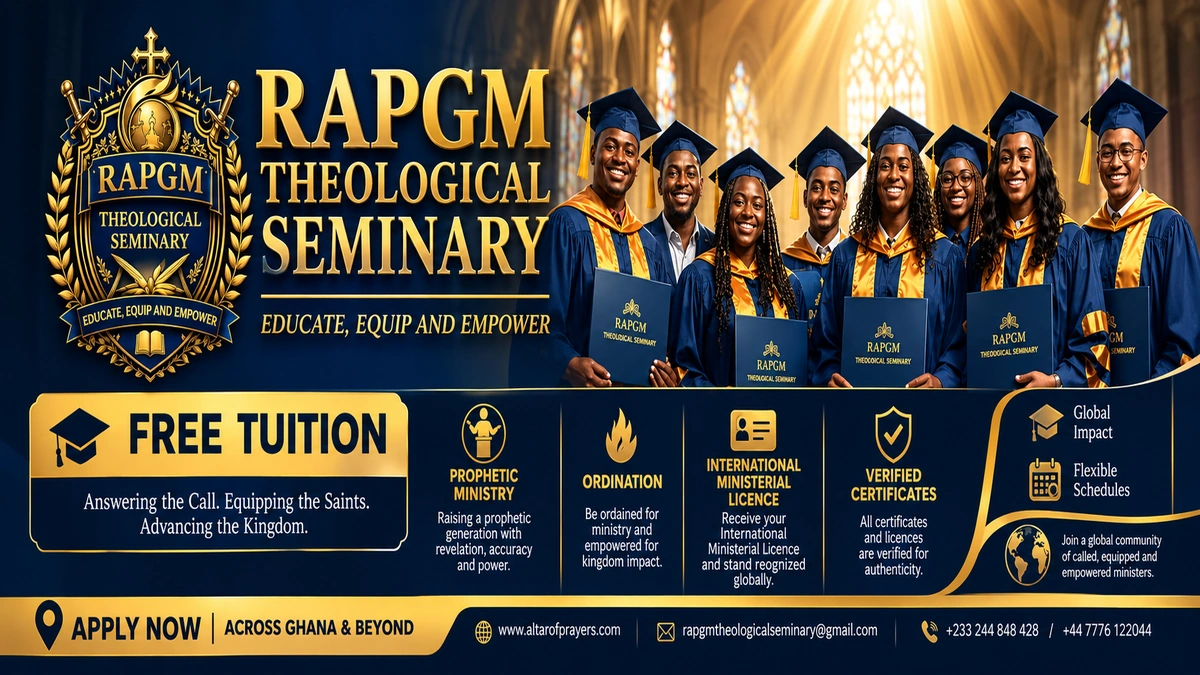
RAPGM Theological Seminary provides tuition-free ministry training to make foundational theological education more accessible to individuals who desire to grow in Christian service.
Applicants are required to pay a GHS 100 application form fee.
Upon successful completion of the program and fulfillment of the seminary’s academic requirements, students may obtain their Certificate in Christian Ministry after paying the applicable certificate processing fee. Certification arrangements and any additional applicable charges will be communicated by the seminary.
Students should note that tuition-free education does not necessarily mean that application, assessment, graduation, or certificate processing services are free.
Progression to Further Ministry Training
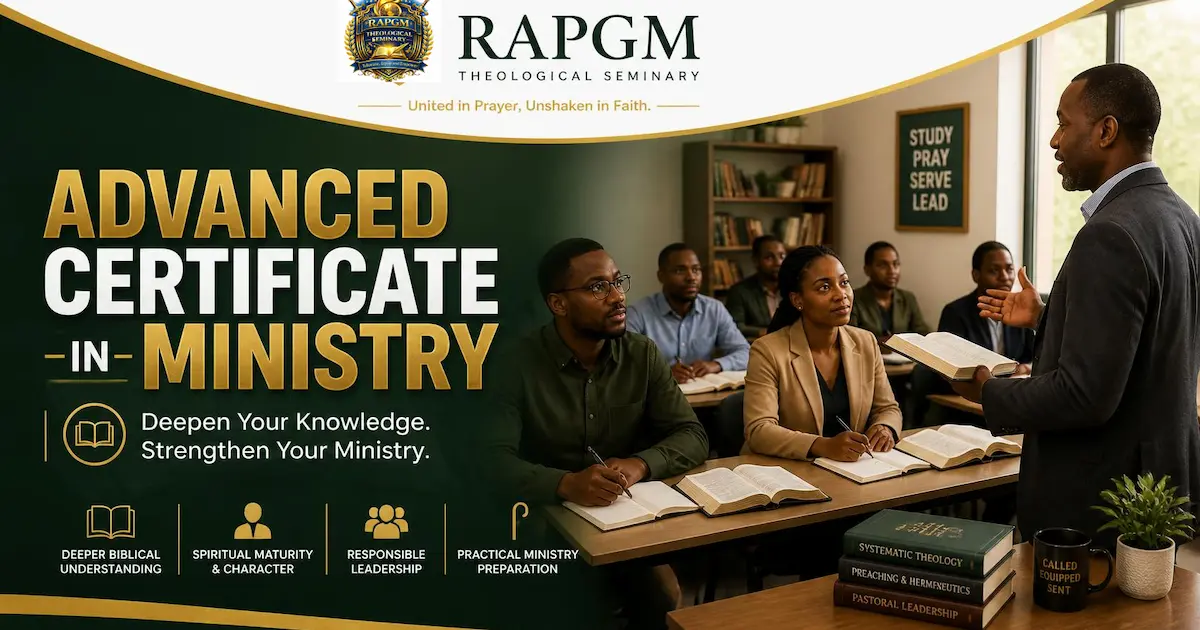
The Certificate in Christian Ministry provides a foundation for further theological education. Graduates who wish to deepen their biblical knowledge, strengthen their ministry skills, and prepare for greater responsibilities may consider progressing to the Advanced Certificate in Ministry, subject to the seminary’s admission and progression requirements.
Students who eventually pursue the Diploma in Theology and Ministry may also explore further ministry leadership development. Any consideration for ordination under Rockefeller Altar of Prayers Global Ministries remains subject to the applicable academic, spiritual, character, and ministry-readiness assessments. Completing this certificate alone does not guarantee ordination.
Why Choose RAPGM Theological Seminary?
At RAPGM Theological Seminary, our commitment is to help believers grow in the knowledge of God’s Word, develop spiritual maturity, and prepare for responsible service.
Our approach brings together:
- Biblical education: Learning grounded in Scripture.
- Spiritual formation: Developing prayer, discipline, and Christian character.
- Practical ministry: Exploring how biblical principles apply to real ministry situations.
- Accessible training: Tuition-free instruction with a stated application fee.
- Ministry development: Preparing students to serve faithfully within the church and wider community.
Our desire is to see students become more than knowledgeable individuals. We want to encourage faithful, compassionate, biblically grounded servants who understand the responsibility of representing Jesus Christ.
Begin Your Ministry Training Today
Do you desire to understand God’s Word more deeply, strengthen your spiritual life, and prepare for meaningful Christian service?
The Certificate in Christian Ministry at RAPGM Theological Seminary is an opportunity to begin that journey with structured biblical instruction and an introduction to essential ministry disciplines.
Take the next step in your spiritual and ministry development.
Apply for Admission:
Visit RAPGM Theological Seminary Admissions to begin your application.
Institution: RAPGM Theological Seminary
Website: altarofprayers.com
Tagline: United in Prayer, Unshaken in Faith.
Scriptural Foundation:
“And he gave some, apostles; and some, prophets; and some, evangelists; and some, pastors and teachers; For the perfecting of the saints, for the work of the ministry, for the edifying of the body of Christ.” — Ephesians 4:11–12 (KJV)
At RAPGM Theological Seminary, we believe that preparation strengthens service, biblical understanding guides ministry, and godly character helps sustain a faithful Christian calling.