Advancing Biblical Knowledge, Spiritual Maturity, and Ministerial Excellence
Program Level: Advanced Ministry Training
Institution: RAPGM Theological Seminary
Delivery Mode: Online and Flexible Learning
Tuition: Free
Application Form Fee: GHS 100, subject to the seminary’s published admission arrangements
Certification: Advanced Certificate in Ministry upon successful completion of the required coursework and assessments.
Program Overview
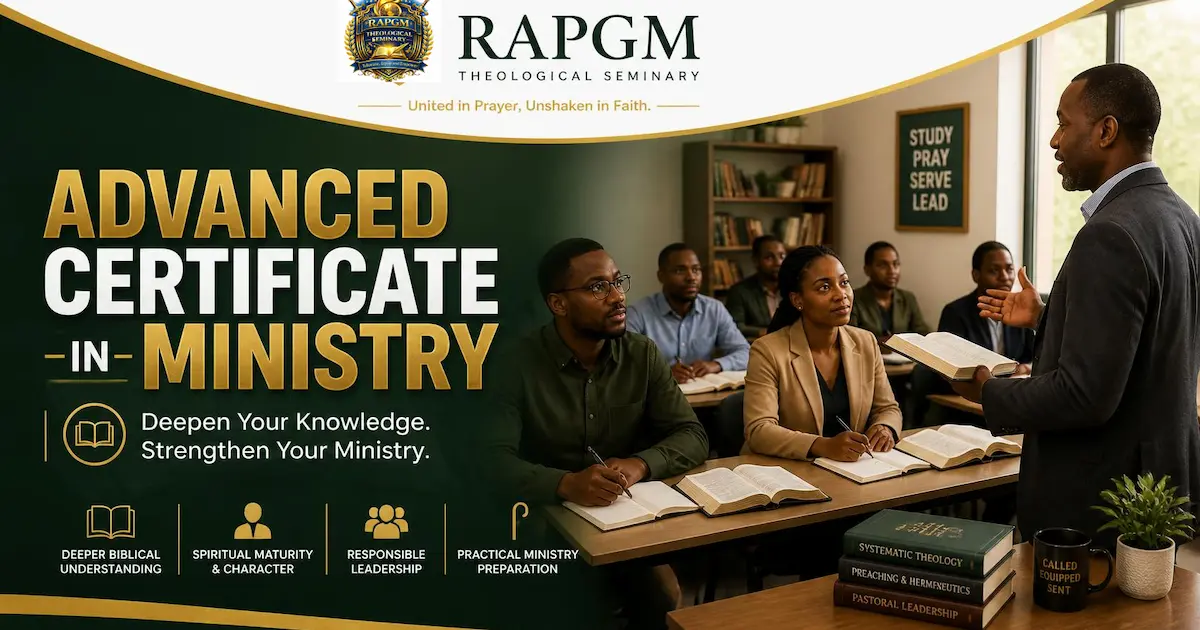
The Advanced Certificate in Ministry at RAPGM Theological Seminary is designed for believers, church workers, ministry leaders, and aspiring ministers who desire to deepen their biblical understanding, strengthen their spiritual development, and improve their effectiveness in Christian service.
Building on the foundational knowledge acquired through the Certificate in Christian Ministry, this program takes students into more developed areas of biblical interpretation, sermon preparation, pastoral leadership, prophetic ministry, counselling, discipleship, and ministry administration.
Ministry requires more than passion, spiritual gifts, or a willingness to serve. It also requires sound doctrine, disciplined study of Scripture, godly character, wisdom in dealing with people, and the ability to make responsible decisions in challenging situations.
This program therefore combines theological learning with practical ministry preparation to help students develop the knowledge, character, and skills needed for greater responsibility within the church and the wider community.
Whether you are already serving as a church worker, leading a ministry department, assisting a pastor, or preparing for future ministry leadership, the Advanced Certificate in Ministry offers an opportunity to strengthen your preparation for faithful and effective service.
Biblical Foundation
“Meditate upon these things; give thyself wholly to them; that thy profiting may appear to all.” — 1 Timothy 4:15 (KJV)
Purpose of the Program
The purpose of the Advanced Certificate in Ministry is to equip students with deeper biblical knowledge, stronger ministerial competencies, and an increased understanding of the responsibilities associated with Christian leadership.
The program emphasizes biblical accuracy, spiritual maturity, ethical conduct, practical ministry skills, and responsible use of spiritual gifts.
Students will be encouraged to move beyond basic familiarity with Christian teachings and develop the ability to interpret Scripture carefully, communicate biblical truth effectively, guide others wisely, and evaluate ministry situations using sound biblical and ethical principles.
What You Will Study
1. Advanced Biblical Interpretation and Hermeneutics
A minister must understand Scripture accurately before teaching or applying it to the lives of others. This module develops students’ ability to study biblical passages in their historical, literary, and theological contexts.
Topics include:
- Principles and methods of biblical interpretation.
- Historical and cultural backgrounds of biblical passages.
- Literary genres and their interpretation.
- Contextual Bible study.
- Understanding biblical covenants and major theological themes.
- Identifying common errors in biblical interpretation.
- Applying Scripture faithfully to contemporary life.
- Developing Bible lessons from carefully studied passages.
Learning outcome: Students should be able to interpret selected biblical passages with greater accuracy, explain their meaning in context, and apply biblical principles responsibly in teaching and preaching.
2. Christian Doctrine and Systematic Theology
This module develops a deeper understanding of essential Christian doctrines and their importance for church teaching and ministry practice.
Topics include:
- The doctrine of God.
- The person and work of Jesus Christ.
- The person and work of the Holy Spirit.
- The doctrine of salvation.
- The nature and mission of the Church.
- The authority and inspiration of Scripture.
- The doctrine of humanity and sin.
- The resurrection, judgment, and Christian hope.
- Introduction to theological reflection and doctrinal discernment.
Learning outcome: Students should be able to explain major Christian doctrines, recognize the importance of sound teaching, and relate theological understanding to practical ministry.
3. Advanced Preaching and Sermon Development
Effective preaching requires biblical understanding, clear communication, spiritual preparation, and sensitivity to the needs of the congregation.
This module develops students’ ability to prepare and deliver sermons that are biblically grounded, logically organized, spiritually meaningful, and relevant to their audience.
Topics include:
- Principles of expository preaching.
- Topical, textual, and narrative sermons.
- Developing a clear sermon theme and objective.
- Identifying the central message of a biblical passage.
- Constructing sermon introductions, main points, and conclusions.
- Using illustrations and applications responsibly.
- Delivering sermons with confidence and clarity.
- Preaching to different audiences.
- Avoiding manipulation and misrepresentation of Scripture.
- Evaluating sermons and receiving constructive feedback.
Learning outcome: Students should be able to prepare and deliver structured sermons that communicate biblical truth accurately and encourage spiritual growth.
Practical assignment: Students may be required to prepare a written sermon manuscript and deliver a sermon within an assigned time limit.
4. Advanced Prophetic Ministry and Spiritual Discernment
This module builds on the introductory prophetic studies covered in the Certificate in Christian Ministry. It focuses on biblical discernment, responsible prophetic communication, spiritual gifts, and accountability in ministry.
Students will be encouraged to approach prophetic ministry with reverence for Scripture, humility, maturity, and a willingness to be corrected.
Topics include:
- Biblical models of prophetic ministry.
- The prophetic ministry of the Old and New Testaments.
- Understanding spiritual gifts and their purpose in the Church.
- Developing discernment in evaluating spiritual impressions.
- Dreams, visions, symbolism, and interpretation.
- Biblical principles for weighing prophetic messages.
- Prophetic ministry and the authority of Scripture.
- Accountability and order in congregational ministry.
- Ethical responsibilities when delivering prophetic messages.
- Pastoral oversight, correction, and spiritual maturity.
- Avoiding fear-based prophecies, manipulation, and unsupported promises.
Key Scriptures: 1 Corinthians 12:4–11; 1 Corinthians 14:26–33; 1 Thessalonians 5:19–21.
Learning outcome: Students should be able to assess prophetic claims more carefully, explain biblical principles governing spiritual gifts, and recognize the importance of accountability and responsible prophetic practice.
Important: This module develops theological understanding and ministry skills. It does not guarantee supernatural experiences or establish that every spiritual impression is a message from God.
5. Pastoral Counselling and Care
Pastoral ministry frequently involves supporting people through personal struggles, family difficulties, grief, conflict, and spiritual questions.
This module develops students’ understanding of pastoral care and the responsibilities involved in offering appropriate support.
Topics include:
- Biblical foundations of pastoral care.
- Active listening and compassionate communication.
- Pastoral conversations and basic helping skills.
- Supporting individuals experiencing grief and loss.
- Understanding common family and relationship challenges.
- Conflict resolution and reconciliation.
- Confidentiality and ethical boundaries.
- Recognizing emotional distress and safeguarding concerns.
- Referral to qualified mental health, medical, or other professionals.
- Avoiding harmful advice, coercion, and misuse of spiritual authority.
Learning outcome: Students should be able to provide appropriate introductory pastoral support, identify the limits of their competence, and recognize when specialist intervention is needed.
This is theological and pastoral training, not a substitute for professional counselling, psychology, or clinical mental health qualifications.
6. Marriage, Family Ministry, and Relationship Support
Healthy families and relationships contribute to the well-being of individuals and communities. This module explores biblical teaching on marriage and family life while examining practical ways ministers can support couples and families.
Topics include:
- Biblical principles of marriage and family.
- Communication, trust, and mutual respect.
- Conflict management and reconciliation.
- Marriage preparation and pastoral guidance.
- Family relationships and parenting responsibilities.
- Supporting couples through common relational difficulties.
- Responding appropriately to marital crises.
- Recognizing domestic abuse and prioritizing safety.
- Confidentiality, impartiality, and pastoral boundaries.
- Referral to qualified marriage and family professionals.
Learning outcome: Students should be able to discuss biblical principles of marriage and family life and identify responsible approaches to pastoral support for couples and families.
7. Christian Leadership and Ministry Administration
As ministries grow, leaders must develop the organizational and interpersonal skills required to guide people, manage resources, and fulfill ministry objectives.
This module examines leadership principles grounded in Scripture and their application to contemporary ministry organizations.
Topics include:
- Biblical models of leadership.
- Servant leadership and ministerial accountability.
- Delegation and team development.
- Planning and organizing church activities.
- Ministry vision, mission, and goal setting.
- Conflict management and decision-making.
- Financial stewardship and responsible resource management.
- Record keeping and administrative procedures.
- Volunteer coordination and leadership development.
- Accountability structures and ethical governance.
Learning outcome: Students should be able to prepare basic ministry plans, coordinate teams, and identify sound administrative practices that support effective and accountable Christian leadership.
8. Discipleship, Mentorship, and Leadership Development
Christian ministry is not only about preaching to people; it is also about helping them grow in faith, develop Christian character, and become effective disciples of Jesus Christ.
This module equips students to understand the process of spiritual formation and the responsibility of nurturing others.
Topics include:
- The biblical foundations of discipleship.
- Developing new believers through structured teaching.
- Mentorship and spiritual guidance.
- Character formation and accountability.
- Developing future ministry leaders.
- Encouraging spiritual gifts and service.
- Small-group discipleship and Bible study leadership.
- Supporting spiritual growth through prayer and Scripture.
- Establishing healthy mentoring relationships and boundaries.
Learning outcome: Students should be able to outline a basic discipleship plan and identify practical approaches to mentoring believers and developing future leaders.
9. Evangelism, Church Growth, and Mission
This module examines biblical approaches to evangelism, outreach, missions, and the development of healthy Christian communities.
Students will explore ways to communicate the gospel effectively while maintaining biblical integrity, compassion, and respect for others.
Topics include:
- The Great Commission and the mission of the Church.
- Personal and corporate evangelism.
- Community outreach and compassionate service.
- Discipleship and follow-up for new believers.
- Developing church outreach strategies.
- Understanding barriers to evangelism.
- Building welcoming and spiritually nurturing congregations.
- Introduction to cross-cultural mission.
- Digital evangelism and responsible use of online platforms.
- Evaluating outreach activities and ministry effectiveness.
Learning outcome: Students should be able to develop a basic outreach strategy that integrates evangelism, discipleship, and practical service to the community.
10. Children, Youth, and Family Ministry Leadership
This module expands students’ understanding of ministry among children, teenagers, and young adults, with an emphasis on teaching, leadership development, and safeguarding.
Topics include:
- Biblical foundations of ministry to younger generations.
- Planning structured children’s and youth programs.
- Preparing age-appropriate Bible lessons.
- Youth discipleship and mentorship.
- Leadership development among young people.
- Responding to peer pressure and social challenges.
- Supporting healthy family relationships.
- Safeguarding and child protection.
- Responsible communication and appropriate boundaries.
- Evaluating the effectiveness of youth and children’s programs.
Learning outcome: Students should be able to design a basic ministry program for children or young people and identify appropriate safeguarding and leadership practices.
11. Chaplaincy, Crisis Support, and Community Care
Chaplaincy ministry involves offering spiritual care and compassionate support in a variety of institutional and community settings.
This module develops students’ understanding of pastoral presence, crisis response, and the ethical responsibilities of serving people experiencing difficult circumstances.
Topics include:
- Biblical foundations of compassion and service.
- The role of chaplains in different settings.
- Listening and providing appropriate spiritual support.
- Supporting people experiencing grief, illness, loss, or crisis.
- Respecting religious and cultural differences.
- Pastoral support in hospitals, schools, prisons, and workplaces.
- Ethical boundaries and confidentiality.
- Safeguarding and professional responsibilities.
- Working with institutional staff and other care providers.
- Referral and collaboration with qualified specialists.
Learning outcome: Students should be able to explain the responsibilities of chaplaincy ministry and demonstrate an understanding of respectful, ethical, and compassionate pastoral care.
Institutional chaplaincy positions may require additional qualifications, accreditation, background checks, or authorization from the relevant institution.
12. Church History and Christian Ministry Traditions
Understanding the history of the Church helps ministers appreciate the development of Christian doctrine, worship, missions, and leadership across generations.
Topics include:
- The early Church and the spread of Christianity.
- Major developments in Christian history.
- The Reformation and its significance.
- Christian missions and the growth of the global Church.
- The development of Pentecostal and charismatic movements.
- The history of Christianity in Africa.
- The role of Christian leadership in society.
- Learning from historical successes and failures in ministry.
Learning outcome: Students should be able to describe significant developments in Church history and explain their relevance to contemporary Christian ministry.
Program Learning Outcomes
Upon successful completion of the Advanced Certificate in Ministry, students should be able to:
- Interpret selected biblical passages using sound hermeneutical principles.
- Explain major Christian doctrines and their relevance to ministry.
- Prepare and deliver structured, biblically grounded sermons.
- Demonstrate a deeper understanding of prophetic ministry, discernment, and accountability.
- Apply basic pastoral care principles while respecting professional boundaries.
- Explain biblical approaches to marriage, family ministry, and relationship support.
- Prepare basic ministry plans and demonstrate responsible leadership principles.
- Develop introductory discipleship and mentorship strategies.
- Design practical evangelism and community outreach activities.
- Identify appropriate approaches to children’s and youth ministry.
- Explain the responsibilities and ethical requirements of chaplaincy ministry.
- Recognize the importance of Church history and theological reflection in contemporary ministry.
Who Should Apply?
The Advanced Certificate in Ministry is suitable for:
- Graduates of the Certificate in Christian Ministry.
- Church workers seeking deeper theological preparation.
- Pastoral assistants and ministry coordinators.
- Aspiring preachers and Bible teachers.
- Ministers seeking to strengthen their preaching and leadership skills.
- Individuals interested in developing their understanding of prophetic ministry.
- Christians involved in pastoral care and family ministry.
- Leaders working with children, teenagers, and young adults.
- Individuals interested in chaplaincy and community service.
- Believers preparing for further theological education.
Applicants should demonstrate a willingness to study Scripture seriously, participate in assessments, uphold academic integrity, and develop the character expected of Christian workers.
Admission requirements, including any prior qualification or equivalent experience, will be communicated by RAPGM Theological Seminary.
Teaching, Learning, and Assessment
The program combines theological instruction with practical learning activities intended to help students apply what they study.
Depending on the course requirements, students may complete:
- Structured theological lessons.
- Bible interpretation exercises.
- Written assignments and quizzes.
- Sermon preparation and preaching assessments.
- Case studies in pastoral care and ministry ethics.
- Ministry planning exercises.
- Practical reflections on discipleship and leadership.
- Presentations and other approved assessments.
Students are expected to participate responsibly, submit original work, respect differing perspectives, and demonstrate a willingness to receive guidance and correction.
Successful completion depends on meeting the seminary’s academic and assessment requirements.
Duration and Study Format
The program duration and class schedule will be communicated during admission and orientation. Students will receive information about course materials, learning activities, assessment deadlines, and completion requirements.
RAPGM Theological Seminary seeks to make ministry education accessible through online instruction and flexible learning arrangements, subject to the published academic schedule.
Tuition and Certification
Tuition: Free
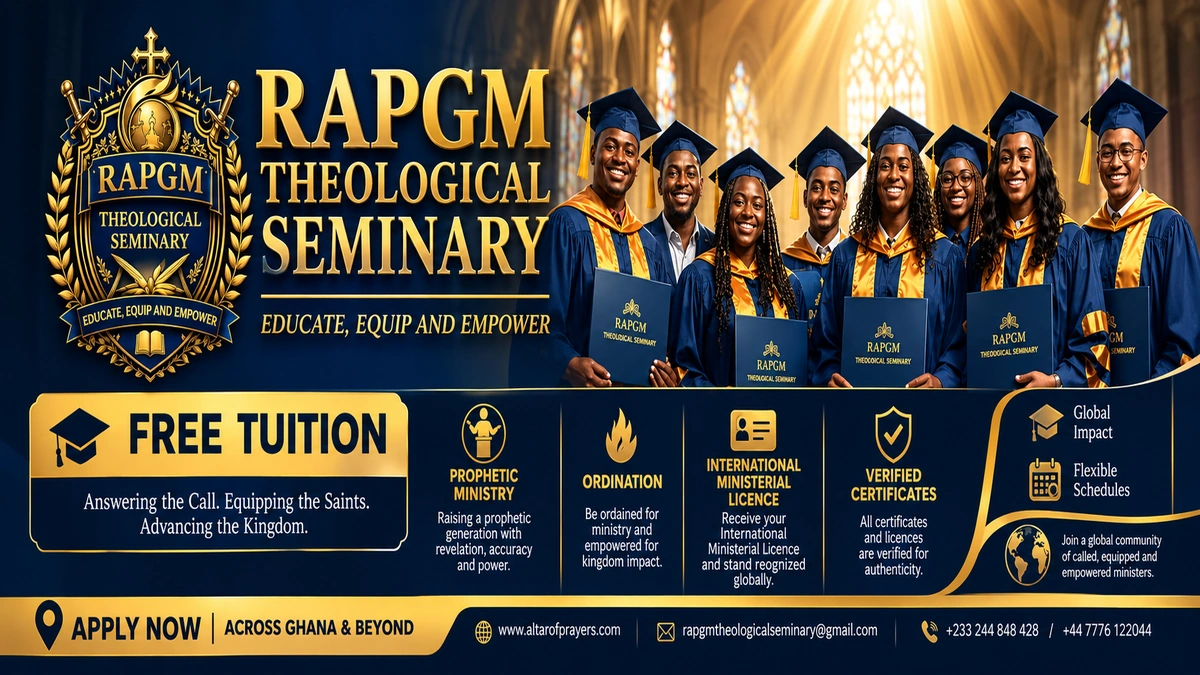
RAPGM Theological Seminary offers tuition-free ministry training to make theological education more accessible to believers seeking to strengthen their Christian service.
The application form fee is GHS 100, subject to the seminary’s published admission arrangements.
Students who successfully complete the program and satisfy all academic requirements may obtain their Advanced Certificate in Ministry after paying the applicable certificate processing fee. The seminary will communicate the relevant certification arrangements and charges.
Students should confirm all fees, assessment requirements, and certification procedures directly with the seminary before enrolling.
Progression to Further Theological Education
The Advanced Certificate in Ministry is intended to deepen the foundational knowledge acquired through the Certificate in Christian Ministry.
Students who wish to continue developing their theological knowledge and ministry competencies may consider progressing to the Diploma in Theology and Ministry, subject to the seminary’s admission and progression requirements.
Further study may provide opportunities to develop greater competence in biblical interpretation, pastoral leadership, ministry administration, preaching, and other areas of Christian service.
Academic progression does not automatically confer ordination, ministerial appointment, or a professional licence. Any consideration for ordination through Rockefeller Altar of Prayers Global Ministries is subject to the ministry’s applicable academic, spiritual, character, and ministerial-readiness assessments.
Why Choose RAPGM Theological Seminary?
At RAPGM Theological Seminary, we are committed to developing believers who combine biblical understanding with spiritual maturity, integrity, and practical ministry competence.
Our training emphasizes:
- Deeper biblical understanding: Developing the ability to study and explain Scripture responsibly.
- Spiritual formation: Encouraging prayer, holiness, humility, and accountability.
- Practical ministry development: Applying theological knowledge to preaching, discipleship, leadership, and pastoral care.
- Responsible spiritual gifts: Encouraging biblical discernment and ethical prophetic practice.
- Leadership preparation: Developing organizational, communication, and team-building skills.
- Accessible theological education: Providing tuition-free instruction with a stated application fee.
Our vision is to encourage Christian workers who are prepared to serve faithfully, communicate biblical truth accurately, care for people compassionately, and represent Christ with integrity.
Begin Your Advanced Ministry Training Today
Are you ready to deepen your understanding of God’s Word, strengthen your ministry skills, and prepare for greater responsibility in Christian service?
The Advanced Certificate in Ministry at RAPGM Theological Seminary offers an opportunity to develop your biblical knowledge, leadership ability, and practical ministry competence.
Take the next step in your theological education and continue growing in your calling to serve God and His people.
Apply for Admission:
Visit the RAPGM Theological Seminary Admissions Page to begin your application.
Institution: RAPGM Theological Seminary
Website: altarofprayers.com
Tagline: United in Prayer, Unshaken in Faith.
Scriptural Foundation
“And the things that thou hast heard of me among many witnesses, the same commit thou to faithful men, who shall be able to teach others also.” — 2 Timothy 2:2 (KJV)
At RAPGM Theological Seminary, we believe that effective ministry grows through faithful biblical study, spiritual formation, practical preparation, and a lifelong commitment to serving Jesus Christ.