


Let’s be real. Prayer isn’t always a serene, hands-folded, instantly fulfilling experience. Sometimes it feels awkward, boring, or just plain hard. If you’ve ever started to pray only to find your mind wandering to your homework, your social feed, or what you’re going to eat later, you are not alone. Every teen—and honestly, every adult—goes through seasons where connecting with God feels like a struggle. The good news? Recognizing the hurdle is the first step to clearing it. Here are ten common prayer challenges teens face, and more importantly, some down-to-earth ways to move past them.
1. The “I Don’t Know What to Say” Struggle
Why It Happens
You sit down to pray, and your mind goes completely blank. You might feel pressure to use fancy, holy-sounding words or to have a long, profound list of requests. This pressure can create so much performance anxiety that you just don’t start.
How to Overcome It: Keep It Simple
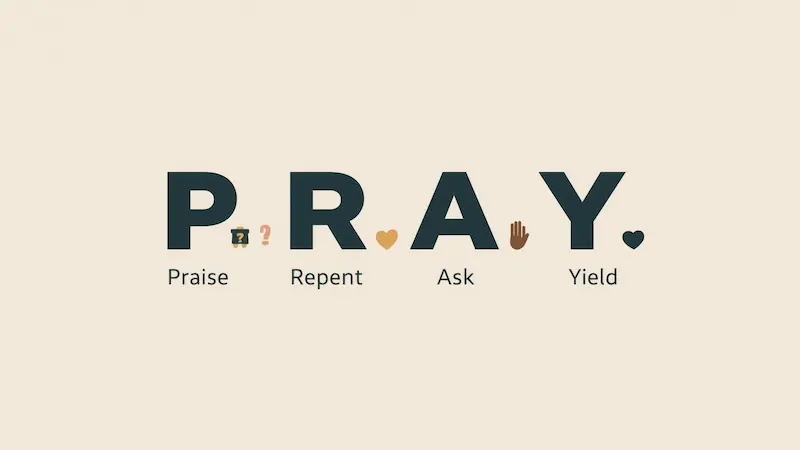
Remember, prayer is just a conversation. You wouldn’t use Shakespearean English to text your best friend. Talk to God like you’re talking to a trusted friend who already knows you. Start with something easy like, “Hey God, my day was kinda stressful. Help me relax,” or “Thanks for that funny thing that happened today.” The acronym P.R.A.Y. can help:
- Praise: “God, you’re awesome because…”
- Repent: “Sorry for the time I…”
- Ask: “Can you help me with…”
- Yield: “Your will be done in this situation.”
2. The Distraction Dilemma
Why It Happens
Your phone buzzes. You remember a project due tomorrow. You start thinking about that awkward conversation from three years ago. Our brains, especially in a hyper-connected world, are wired for distraction. It’s not a moral failure; it’s a human reality.
How to Overcome It: Create a Focus Zone
Instead of fighting distractions, minimize them. Put your phone in another room or on Do Not Disturb mode. Try praying out loud—it’s much harder for your mind to wander when your ears are involved. Another powerful trick? Pray while doing something active like walking, journaling your prayers, or even coloring. The mild physical activity can help quiet the mental noise.
3. Feeling Like Your Prayers Hit the Ceiling
Why It Happens
You pray but feel nothing. No warmth, no sense of presence, no immediate answer. It can feel like you’re just talking to the ceiling. This is often because we subconsciously expect a physical or emotional sign that God is listening.
How to Overcome It: Shift Your Focus
Faith is trusting that God hears even when you can’t feel it. Shift your prayer from seeking a feeling to exercising faith. You can say, “God, I don’t feel you right now, but I know you’re here. I trust that you’re listening.” Base your confidence on His promise (1 John 5:14), not your fluctuating emotions.
4. The “I’m Too Busy” Battle
Why It Happens
Between school, sports, family, friends, and just trying to sleep, finding a “quiet time” can feel impossible. Prayer often gets pushed to the bottom of the endless to-do list.
How to Overcome It: Micro-Prayers
Who says prayer has to be a 30-minute secluded event? Weave it into the fabric of your day. Send up a sentence prayer before a test (“Help me remember what I studied”), while walking to class (“Thank you for this sunshine”), or when you hear a siren (“Be with those first responders”). These “micro-prayers” keep you connected to God all day long.
“For more ideas on fitting prayer into a packed schedule, check out our guide to Short & Powerful: 5-Minute Prayers for Teens on the Go.”
5. Doubting If God is Even Listening
Why It Happens
When prayers go unanswered for a long time, or when life gets hard, it’s natural to wonder, “Is anyone even there? Does this actually matter?”
How to Overcome It: Remember His Promises
This is where you have to go back to the basics of what you believe. God’s character doesn’t change based on our circumstances. Find a verse about God listening (like Jeremiah 29:12) and write it down. Pray it back to Him: “Your word says that when I call on you, you will listen. So I’m standing on that promise today, even when I have doubts.”
6. Not Seeing Answers (Or Not Liking Them)
Why It Happens
We pray for a specific outcome—to make the team, for a family member to be healed, for a conflict to end. When the answer is “no” or “wait,” it’s confusing and disappointing. We can feel ignored or rejected.
How to Overcome It: Trust the Timing
This is the toughest one. It requires shifting your perspective from seeing prayer as a vending machine (request in, answer out) to seeing it as part of a relationship with a God who sees the bigger picture. Try adding this to your prayers: “God, I really want [this specific thing], but more than that, I want your will. Help me trust that your plan is better than mine.”
7. Feeling Unworthy to Pray
Why It Happens
You messed up. You said something you regret, you scrolled through stuff you shouldn’t have, you lied to your parents. Shame tells you, “You can’t talk to God now. You need to clean yourself up first.”
How to Overcome It: Embrace Grace
That’s the opposite of the gospel! Prayer is for the person who feels unworthy. God’s grace means we can come to Him exactly as we are. The first prayer after a mistake can be as simple as, “God, I’m sorry. I need your help and your forgiveness.” And then receive it. He’s waiting for you, not to scold you, but to restore you.
8. The Repetitive Rut
Why It Happens
Your prayers start to sound the same every single day. “God, bless my family and friends. Help me on my test. Amen.” It becomes a monotonous routine that feels devoid of meaning.
How to Overcome It: Change Your Method
Jumpstart your prayer life by trying a new method. Try a prayer app that sends you prompts. Pray through a Psalm and use David’s words as your own. Try “ACTS” (Adoration, Confession, Thanksgiving, Supplication). Or simply change your location—go pray outside in nature instead of your bedroom.
9. Peer Pressure and Self-Consciousness
Why It Happens
The idea of praying before lunch at school or talking about your faith with friends can be terrifying. You don’t want to be judged, labeled as “weird,” or made fun of.
How to Overcome It: Own Your Faith
Your faith is personal, but not necessarily always private. You don’t have to make a show of it. A simple, silent head-bow before you eat is enough. When it comes to talking about it, own it with quiet confidence. You don’t need to preach; just be honest if it comes up: “Yeah, I pray sometimes. It helps me deal with stress.” Often, peers are more curious than critical.
Not Feeling Anything When You Pray
Why It Happens
Similar to #3, but more persistent. You might be doing “everything right,” but it feels dry and emotionless for weeks. This is a spiritual desert, and every believer walks through it.
How to Overcome It: Faith Over Feelings
In these seasons, commitment trumps emotion. Show up anyway. Be faithful in the routine even when it feels empty. This is where your faith grows roots deep enough to survive any drought. Tell God, “I’m here because you are worthy, not just because I feel like it.”
Your Prayer Journey is Unique
Look, this list isn’t a report card. You might struggle with one of these or all ten. The point isn’t to master prayer like a subject in school. The point is to build a real, honest, and ongoing relationship with a God who loves you relentlessly. It’s a journey with ups and downs, and it’s meant to be traveled in grace, not guilt.
(CTA) What’s the one prayer struggle that trips you up the most? Share it in the comments below—you might be surprised how many others feel the exact same way. And for a little extra help, download our free “5-Day Prayer Jumpstart for Teens” guide for simple, daily prompts delivered to your inbox.


